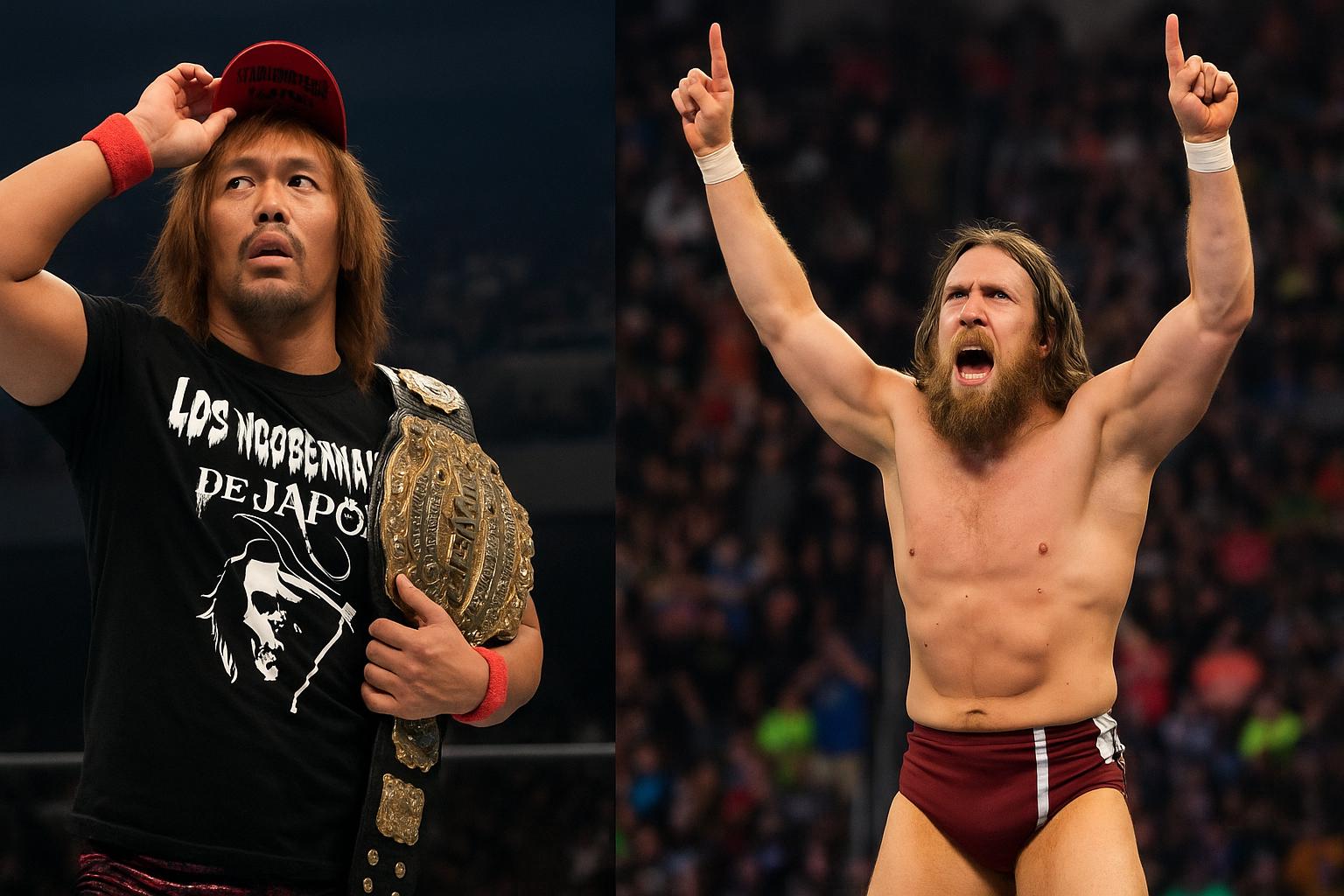
The Journey of Tetsuya Naito in NJPW
New Japan Pro-Wrestling (NJPW), renowned for its intense bouts and skilled performers, has seen many wrestlers rise through its ranks. Among them, Tetsuya Naito’s journey stands out—not just for his ultimate success but for his ability to navigate the complex and often challenging path to stardom. Initially positioned as a potential frontman for NJPW, Naito’s early career was fraught with obstacles. The company envisioned Naito as a traditional babyface—a typical protagonist whose appeal would merge seamlessly with NJPW’s fanbase. However, things did not initially go as planned.
Naito struggled to establish a strong connection with the audience. Critiques labeled his babyface character as bland and uninspiring. Despite his in-ring prowess and evident charisma, fans failed to embrace him in the way NJPW had hoped. This disconnect was exacerbated by his status as a replacement for more established figures at the time. For Naito, who was expected to fill the significant shoes of NJPW’s leading stars, the tepid response was both professionally challenging and personally disheartening.
Reinvention and the Birth of Los Ingobernables de Japón
Faced with lukewarm reception, Naito realized the necessity of reinvention—a critical turning point in his career. In 2015, he embraced a new character persona that resonated with both his personal sensibilities and the audience’s desire for something fresh. With this transformation came the formation of Los Ingobernables de Japón, a faction deeply rooted in attitude and mystique. Unlike his previous straightforward hero persona, this new incarnation was marked by an attitude of Tranquilo, exuding a laid-back demeanor that stood in stark contrast to NJPW’s conventional characters.
Naito’s careless yet defiant attitude was precisely what he needed to connect with fans. The crowd could now relate to his struggle against the predetermined norms of the wrestling establishment. The metamorphosis into a non-conformist hero led to a revitalized career, allowing him to ascend to the echelons of popularity that NJPW initially envisioned. The understated rebellion of Tranquilo became his trademark, a definitive style that marked Naito as distinct within the landscape of professional wrestling.
The Resonating Elements of Daniel Bryan’s WWE Storyline
Across the Pacific, Daniel Bryan’s trajectory in WWE presented striking parallels to Naito’s narrative. Bryan’s entry into WWE was accompanied by doubt and underestimation from decision-makers, rooted in WWE’s penchant for larger-than-life characters. Despite Bryan’s undeniable wrestling acumen and widespread acclaim from smaller promotions, WWE cast him in the role of an underdog, challenging traditional norms of what a main event star should embody.
As Bryan’s story in WWE unfolded, the audience emerged as a vocal entity, endorsing Bryan’s potential and rallying against corporate oversight. The “Yes Movement,” a grassroots revolution of sorts, mirrored the fans’ demand for an identity shift within WWE. As the movement gained momentum, Bryan’s journey reached a crescendo at WrestleMania 30, where his victory symbolized a colossal shift, underscoring fandom’s power in revising WWE’s main event narrative.
Comparative Analysis of Both Journeys
The parallel journeys of Naito and Bryan underscore the influence of the underdog narrative within wrestling narratives. While Naito contended with character misalignment in NJPW, Bryan grappled with WWE’s narrow casting vision. Despite distinct challenges shaped by their respective promotions, both wrestlers eventually transcended barriers through ardent fan devotion.
For Naito, the audience’s eventual embrace of his Tranquilo ethos signaled not just acceptance but fervent support, catapulting him to the top. Bryan’s rise as a main-event wrestler manifested through fan engagement, illustrating a profound interaction between performer and audience. These cases reflect how supporters can challenge, even defy, established ideologies in professional wrestling, steering careers in unexpected directions.
The Role of Fan Engagement and Character Evolution
Integral to both their ascensions were the concepts of character evolution and audience connection. Naito’s transformation into a carefree enigma and Bryan’s embodiment of the underdog ideal paralleled each other in significance. Both wrestlers underwent a substantial persona shift, marking a departure from their initial characterizations that did not hit the mark with audiences. The ability to adjust and ultimately resonate with the crowd underscores the dynamic and symbiotic relationship between a wrestler and their fanbase.
In Naito’s case, the character development aligned with a latent part of his wrestling charisma that had not been fully explored—one that defied expectations yet intuitively aligned with his expressive wrestling style. In a supportive yet subtly demanding manner, fans became instrumental in defining his revised character, fitting both his own narrative and their desires. Similarly, Bryan’s authenticity and wrestling repertoire bespoke a magnetic quality that resonated with audiences ready to vouch for his potential. This organic support accentuated by Bryan’s excellence turned his underdog story into a defining movement.
Impact and Legacy
Naito’s and Bryan’s stories reverberate through the corridors of wrestling history, serving as powerful examples of how fan enthusiasm can reshape corporate perspectives. These instances of underdog success reinforce the notion that the audience is an active participant in the storytelling fabric of wrestling, capable of influencing outcomes and heightening a wrestler’s profile.
The determination of Naito and Bryan, backed by passionate supporters, presents a compendium of lessons in persistence, adaptability, and alignment between performer ethos and fan expectations. This impact is enduring, offering wrestlers and fans a blueprint for future narratives capable of challenging established conventions.
Moreover, these narratives represent more than personal victories; they emphasize industry-wide shifts towards fan-inclusive decision-making processes—a recognition of audience power within the spectacle of sports entertainment. In tracing these journeys, we understand not just the ascent of talented individuals but the evolution of the wrestling industry, where fandom increasingly assumes a proactive, voiceful role.
This article was last updated on: September 4, 2026