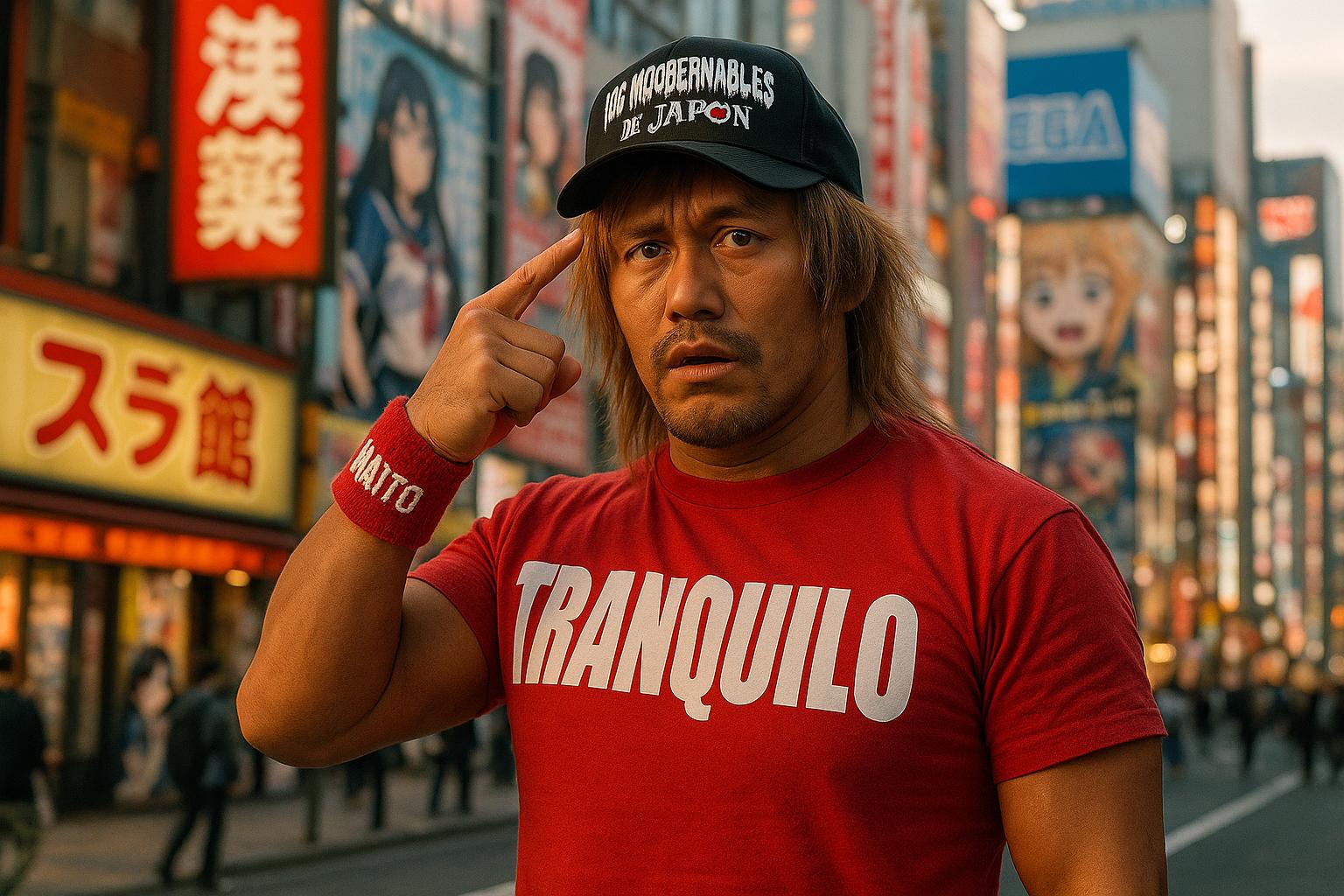
Naito’s Gimmick and Its Resonance with Japanese Pop Culture
Tetsuya Naito, a renowned icon in the sphere of professional wrestling, has crafted a unique character that resonates profoundly with the elements and nuances of Japanese pop culture. His gimmick intertwines aspects of rebellion, nonchalance, and charisma, reflecting the evolving themes and dynamics prominent in the contemporary landscape of Japanese society.
Cultural Rebellion
The character of Tetsuya Naito stands as a symbol of rebellion, embodying an anti-establishment ethos that strikes a chord with audiences. Within Japanese pop culture, there exists a burgeoning fascination with rebellious archetypes that question and defy societal norms and conventions. This is vividly illustrated across various media, including anime, cinema, and music, where central figures often challenge and confront rigid structures and expectations set by society. Naito’s demeanor, depicted by his laid-back attitude and defiance, aligns seamlessly with this cultural narrative. His rebellious nature mirrors the broader sentiments of Japan’s youth, capturing the zeitgeist of a generation that is increasingly questioning authority and striving for personal authenticity. In essence, Naito’s character acts as a conduit for these emerging sentiments, providing a reflection of a society in transition.
Nonchalant Persona
Naito’s nonchalance and, at times, dismissive attitude towards his opponents and the wrestling establishment further amplify his allure to fans and onlookers. This trait resonates with the Japanese cultural concepts of honne and tatemae, which refer to the balancing act between one’s true feelings and the public facade. Through his portrayal of a character seemingly unconcerned with external perceptions, Naito taps into the audience’s yearning for authenticity and individualism. This is particularly attractive to the younger demographic in Japan, who are on the lookout for role models that cherish authenticity over superficial appearances. By doing so, Naito effectively bridges the gap between a character role and a societal archetype, projecting an image that is relevant and aspirational.
Influence of Anime
Anime, as a cornerstone of Japanese pop culture, wield significant influence, and Naito’s gimmick is no exception to this pervasive impact. His complex character, layered with multifaceted personality traits, draws parallels to beloved anime protagonists. These characters often possess a unique blend of charisma, eccentricity, and depth, making them both relatable and inspiring. Moreover, Naito’s occasional incorporation of typical anime gestures and expressions during his wrestling matches enhances his connection with fans, many of whom are also ardent consumers of anime media. This infusion of anime into his performance style serves as a nod to familiar tropes while simultaneously cultivating a distinct brand that resonates with both wrestling enthusiasts and anime aficionados.
Charisma and Appeal
Central to Naito’s widespread popularity is his undeniable charisma. Charisma in Japanese culture frequently aligns with an individual’s capacity to stand out while simultaneously forging deep connections. Naito exemplifies this through his dynamic and riveting in-ring performances, coupled with compelling storytelling outside the ring. Fans are irresistibly drawn to his ability to keep audiences engaged and enthralled, reminiscent of iconic figures in Japanese entertainment who possess the knack to captivate their audience merely through presence and expression. This charisma is not merely about showmanship but extends to the ability to convey emotions and tell stories that resonate beyond the confines of the wrestling ring. Naito’s charisma acts as a powerful vehicle, transporting his character from the realm of sports entertainment into the broader mosaic of cultural phenomena.
Appeal to Modern Themes
The thematic repertoire embodied by Naito’s gimmick reflects broader trends and developments within Japanese society. As Japan grapples with challenges such as maintaining work-life balance, navigating a volatile economy, and adapting to evolving social norms, Naito’s character emerges as a symbol of the longing for greater freedom and self-expression. His character is not just a reflection of personal rebellion but serves as a metaphorical commentary on contemporary societal issues that millions in Japan face. His rising popularity, therefore, is not only linked to his prowess as an entertainer but also to his representation as a symbol of cultural adaptation and commentary.
Interplay with Audience Expectations
Naito’s resonance with his audience does not exist in isolation; it thrives upon the interplay between performer and spectators. This interaction is steeped in an anticipatory relationship, where audience expectations play a crucial role. The theatricality of wrestling, much like other performance arts, relies on the active engagement of its viewers. Naito’s understanding of this dynamic allows him to deftly navigate between being a provocateur and a hero, skillfully manipulating crowd reactions and creating a shared participatory experience. This reciprocity between Naito and his audience enhances the immersive quality of his performances, making watching his bouts not merely an act of spectating but a collective experience.
Global Reach and Cultural Export
Beyond the traditional confines of Japanese pop culture, Naito’s character transcends borders, appealing to global audiences. His gimmickmatic reflections of cultural rebellion and modern themes find commonality in various cultures around the world. In fact, this global resonance underscores the universality of certain cultural narratives, such as the quest for identity, authenticity, and the simultaneous rejection and redefinition of societal norms. Naito’s ability to straddle both local and global spheres is indicative of wrestling’s power as a cultural export, serving as a conduit through which international audiences can engage with Japanese pop culture.
In conclusion, Tetsuya Naito’s innovative wrestling gimmick resonates deeply with Japanese pop culture by embodying elements and narratives that pertinently reflect contemporary societal dynamics. Through a synthesis of traditional and modern influences, Naito crafts a multifaceted persona that captures the imagination and admiration of audiences both domestically and globally. His character serves not only as a conduit for entertainment but also as a medium through which cultural themes and societal debates are explored and understood.
This article was last updated on: July 3, 2026